Thursday, August 4, 2011
Heaven, Hell, Chan & Bell (Part Two)

Getting hell "wrong," in either direction, leads to bad results, bad theology, and "bad Christians."


Sunday, July 31, 2011
Heaven, Hell, Chan & Bell (Part One)
I am a little late to the "Rob Bell, Love Wins" controversy. I was more than a little overwhelmed by the initial hype and online bantering, and so I didn't read the book right away. However, I borrowed Love Wins from my brother-in-law last week and read it. At the same time, another friend was reading Francis' Chan's "Erasing Hell." We engaged in some friendly dialog about the books and the topics covered therein. I've since finished both books, and have some specific thoughts to share.
 The book is written in Bell's now notorious style: conversational, short sentences, lots of spaces, more like a blog post than a book. It is not an academic book; there are no footnotes, very few references to theological big names past or present, and Bell rarely even offers the exact Biblical reference. Rather, he'll say something like, "In John 3 Jesus tells a man..." When I first started reading the book, I was a little disappointed, and thought that it wasn't Bell's best work.
Thursday, March 24, 2011
Responding to Suffering
Brian McLaren wrote a response to John Piper's interpretation of the Japanese earthquake and subsequent tragedies. Essentially, both authors are addressing the question, "What is God's relationship to suffering in the world?" The answers are detailed and complicated - Piper is staunchly Calvinist, and McLaren is spearheading the "Emergent Church." I would encourage reading the posts from both authors.
Saturday, November 13, 2010
Is this how they see me?
I've been thinking about the portrayal of Christians in popular culture, specifically in TV shows. Two of my favorite shows, The Office and Community, recently devoted entire episodes to Christian themes. In the The Office "The Christening" (Season 7, Episode 7), the setting is a church service and reception afterward. The sub-story involves the youth group of the church leaving that day for Mexico in order to build a school. The portrayal of the youth group, both in the church and on the bus as they are leaving, is shallow, simplistic, overly positive, and therefore really funny. But I couldn't help watch it and think, "Is this what people think about the trips I take to Guatemala every year?"
In Season 2 Episode 5 of Community, Abed (who is by far my favorite character) decides to make a Christian movie that will go viral on the web. Except he doesn't want to make a "cheesy Jesus video," he decides to make a video for the post-post modern generation. This episode is a brilliant satire of postmodern language and culture, as can be seen in the dialog in the clip below (for example, "It both is and isn't part of the movie!") But Abed is also playing a Messiah type figure, and the rest of the school are the disciples. The scenes of questions for Abed and his responses are clearly meant to be remixes of Jesus and his disciples. The episode is laugh-out-loud funny, but again, as a Christian, I wonder if my religion is little more than a cultural joke to most people?
And then, of course, there is Arrested Development. Such a funny show with so many brilliant, back-handed comments about many aspects in life. A recurring character is Anne, who is George Micheal's girlfriend. She also happens to be Christian, and therefore dull, quiet, boring, unattractive, and disliked by almost everyone in the family. There are many religious scenes with Anne, some displaying Christian worship services or celebrations of Christmas, all of which are extreme, funny, but clearly mocking as well.
 In the scene below, George Micheal is preparing for a Christian "music burning" party. These parties were really popular in the 90's with youth groups, and the writers do a great job pointing out how silly they are. Nevertheless, the tone, the general portrayal of Anne and Christianity in general, take on a very mocking and demeaning tone. It is this underlying sentiment that has been rolling around in my mind lately. The idea that, of course everyone agrees, Christianity and religion in general is basically silly, and it is fair game to be mocked and used as material for satire. Everyone agrees, these people and what they do is basically silly. I have wondered if this sentiment is only held by the writers and culture of "Hollywood," or if the writers are just using another part of life for comedic purposes, not really meaning to send a message.
But most importantly, I have wondered if these portrayals are really how non-Christians view Christianity.
This is an important question: "Is this really the way 'other people' view me and my religious culture?" For me, the obvious retort would be, "These portrayals are nothing like what we really do or how we really are. In fact, we love Jesus, we love each other, and we love the world. My faith is very important to me, and while I think these portrayals are very funny in their own way, they are far from accurate."
It is easy for me to make this response, because I know Christianity. I am a Christian. It is important to me and it is a huge part of who I am.
But, the really important question comes next: What religions, cultures, or ways of life do I commonly mock, use as jokes, or generally think of as "silly" "unrealistic" or "stupid"?? People who aren't Christians view Christianity as "the other." What are "the others" for me? Who are the people whom I mock, and don't think twice about it? What are the traditions that I think are ridiculous, and I think I am right? What are the lifestyles that I just "don't get"??
Who is "the other" for me?
Peter Rollins recently wrote about this idea in a post entitled, "I am a monster..." He says,
"Whenever we encounter a person as “other” (i.e. as having beliefs and engaging in practices that are foreign to us) we can often experience them as monstrous. In other words, their beliefs and practices appear unfounded and can repel us, confuse us and even frighten us (sometimes for good reason)."
I would argue that the depictions of Christians in the above video clips are examples of people encountering Christians as "other." It is within this experience that Peter points out the very important philosophical and experiential turn:
"This is where, instead of looking at the other, we experience ourselves being looked at. Here we have the earth-shattering experience of glimpsing ourselves through the eyes of the other and encountering our own practices and beliefs as monstrous. Here we do not primarily experience the other as alien, but rather ourselves as alien. We encounter ourselves, for a terrifying moment, as an “other”. Not simply as other to the one we have encountered but rather as other to ourselves."
As I watched these TV episodes, I thought to myself, "I'm not really like that. Am I?" An even scarier question is, "I don't really mock other religions like that. Do I?"
Yes, I am. Yes, I do.
Peter Rollins continues in his post:
"In order to experience the peculiar nature of our own selves we must place ourselves under the judgment of the other....So then, in the genuine encounter with another who is other to us, one comes into contact with oneself as an other....For it is often only when we travel (i.e. encounter those truly different from our own community) that we really meet ourselves in all of our mystery and monstrosity."
I am not "normal." My beliefs and my lifestyle are not "typical." This is a humbling realization. It reminds me to regard "the others" in my life with respect and dignity. And it reminds me that I must always seek to present myself to "the other" in a non-confrontational, non-judgmental way. My religious language, actions and beliefs are "monstrous" - repelling, intimidating, even scary - to someone who is not religious. Because just like the depictions in the TV shows seem foreign, strange, and off-putting to me, so does my everyday expression of Christianity to someone who is not a believer.
Monday, August 16, 2010
Church of the Nazarene & Emergent
The Board of General Superintendents of the Church of the Nazarene just released a statement regarding the "emergent church." It's not that long. You can read it here.
I have a personal interest in this because about one year ago, my teaching contract at a Nazarene Christian High School was not renewed, partially because of my involvement with the emergent church. (I want to stress partially. I recognize there were many factors involved, many of which were my own fault.)
There are several parts of the Nazarene statement on the emerging church that are interesting. First, it states:
"There are others within our denomination...who view the concept of an “emerging” church as a positive and hopeful expression of what it means to be the Church. They are seeking to genuinely come to terms with ministry in a complex and rapidly-changing culture. Their goal is to demonstrate the relevance of biblical truth through incarnational and transformational living.
[They are] deeply committed to the authority and infallibility of the Word of God and the power of the Holy Spirit to change lives, communities, and nations. They are often engaged with the brokenness in society through active, compassionate ministries working diligently to bring renewal, conversion, and transformation."
To me, it sounds like this is a group of people who are doing the really difficult work in the denomination that many other people don't want to do. They are wrestling, searching, experimenting, all for the sake of real transformation in people's lives. These are the types of people we should be supporting, giving more room to speak, and listening to their success stories and learning from their mistakes.
However, the very next paragraph begins:
"The Board of General Superintendents neither endorses nor affirms “emergent churches” or leaders who are not orthodox in their theology." A reference is then made to the "We Believe" creeds and documents of the denomination.
I can't help but think that this is cowardly. Concerns about "orthodoxy," "rightness" and "beliefs" are superseding the work of real people in real communities who are trying to grapple with ministry in the postmodern world. It is exactly this type of emphasis on orthodoxy rather than an unconditional embrace of hurting people that keeps the churches "safe" and subsequently ineffective.
The Nazarene church missed an opportunity to say something meaningful and worthwhile about emerging churches. They are missing an opportunity to support people who are doing radical ministry in radical situations. Instead, they are choosing to hide behind decades of doctrine.
Sunday, March 7, 2010
A New Kind of Way to Read the Bible
I'm reading Brian McLaren's "A New Kind of Christianity," which deals with "10 Questions that are Transforming the [Christian] Faith." (See my introductory post here.) The first question is "What is the overarching story line of the Bible?" This first question has incredible implications, is very interesting, and I first began to think about it during a one-on-one conversation with McLaren himself. I'd recommend reading my friend Kyle's summary posts here and here.
However, the second question, "How should the Bible be understood?" - or rather McLaren's discussion of this topic - is what really got me going this week. He begins by demonstrating through that the Bible has been used to legitimize many of the worst human atrocities in history - not a tough case to make, really. He states, "Slavery, anti-Semitism, colonialism, genocide, chauvinism, homophobia, environmental plunder, the Inquisition, witch burning, apartheid - aren't those worth taking care to avoid, for God's sake?" However, the point is not that we made (many) mistakes in the past, because, of course, we have repented of these mistakes and are trying to use the Bible better now. Aren't we??
What McLaren incisively points out is that "very few Christians today...have given a second thought to - much less repented of - this habitual, conventional way of reading and interpreting the Bible that allowed slavery..." and other horrendous crimes against humanity. In other words, it is not good enough to simplify feel bad that in the past Christians used the Bible to defend certain practices until enough people realized it was wrong; we have to stop using/reading the Bible in the same way.
He states, "Repentance means more than being sorry - it means being different."
What is the way Western Christians typically read the Bible? McLaren uses the analogy of a "legal constitution." For me, this was an "ah-ha" moment. He states,
"It shouldn't surprise us that peopel raised in a constitutional era would tend to read the Bible in a constitutional way. Lawyers in the courtroom quote sections...to win their case, and we do the same with....chapters and verses...We seek to distinguish 'spirit' from 'letter' and argue the 'framers intent'...[as if it is] a universal, eternally binding law."To me, this is exactly what is done by "proof texting" - Christians throwing out verses that prove the point they are trying to make. We create or defend our beliefs by picking and choosing supporting verses. Especially in a Western, democratic, constitutional society, we have become subconsciously trained to think in these terms.
The problem is that the Bible doesn't work this way. It is not internally consistent on many topics; it is easy to distort and abuse passages for the sake of the readers desire (whatever that may be at the moment); and the result is endless debates on interpretive approaches and the meanings of just about every passage in Scripture! When you step back and think about it, if the Bible is supposed to be read like a constitution, it isn't a very good one.
What then is this "new way" to read the Bible? McLaren's imagery is that of a "library of a culture and community." By this he means that it is a "carefully selected group of ancient documents of paramount importance for people who want to understand and belong to the community of people who seek [the Judeo-Christian] God."
This is a challenging idea, and at first seems rather ambiguous. But as he explains it, McLaren makes several good points (which, coincidentally, relate to prior discussions with the COEC). First, there is tension, arguments and questions - it is a "group of people who say different things about the same things" (kind of the like the biblical authors?) The "library preserves, presents, and inspires an ongoing vigorous conversation with and about God...into which we are all invited and through which God is revealed." The Bible was produced by and within a community, and it is meant to be read, heard and experienced by a community.
This approach has interesting implications for the idea of "inspiration." If the Bible is understood as a "constitution" then we would expect every word, the format, the construction and the entire product to be "inspired" in its entirety. This idea has challenged honest theologians for centuries. But if we understand the Bible as an "inspired" (or "authoritative") library, then there are different connotations. It includes key arguments, uniquely reveals God within itself and has the power to provide training, encouragement and guidance.
Clearly, the difference between reading the bible as a constitution and as a cultural library are vastly different, but also in my opinion, incredibly exciting. As McLaren states,
"I anticipate that our quest for a new approach to the Bible will be come more attractive the more we practice it. As we transcend the wrangle and tangle of theo-legal suits and countersuits...we will humbly and joyfully add our voices to the age-old conversation with and about God, a vigorous and vibrant conversation rooted in and inspired by the fascinating array of voices in the Scriptures."
Sunday, February 21, 2010
"A New Kind of Christianity" - First Impressions
 I picked up Brian McLaren's newest book, "A New Kind of Christianity" from the library this weekend. I've only made it through the introductory chapters and have not yet really started reading the so-called "Ten Questions that are Transforming the Faith." But I do know that the book is already getting some buzz around the blog-o-sphere, not surprising given McLaren's notorious reputation. So I thought I would just share a few first impressions of the book:
First, McLaren is writing/speaking from a place of vast experience and personal interaction with Christians from all over the world. I get the impression that in the past several years he has traveled extensively for speaking engagements. He talks about being in Africa, Central and South America, Europe and East Asia. Because he no longer is a professional pastor, when it comes to Christian speakers/authors, I would wager that few have traveled as much as McLaren.
But even beyond the simple fact that he travels a lot, McLaren is an individual who listens as much as he talks. On the two occasions that I have been able to see him speak publicly, he spent just as much time listening to me. Yeah, that's right!! I don't have much to offer and he doesn't know who I am, but on both occasions, I spent between 30-60 minutes sitting in a small circle discussing various ideas and issues. And McLaren did far more listening than he did talking.
The fact that he is a listener as much as a speaker makes me trust his writings all the much more. When he speaks of a "new kind of Christianity" that is "out on the frontier," "transforming the faith," I believe him! He is traveling the globe, speaking in all sorts of venues to all sorts of Christians and non-Christians, and he has a good feel for what is going on in the world.
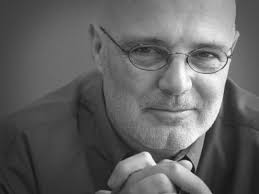 Second, he speaks/writes from a place of sincere humility. Throughout the opening chapters of the book, he defers to his critics. Often he admits that he doesn't know it all, and he isn't trying to give final answers (instead he offers what he calls "responses" to the questions). He recognizes that not everyone agrees with him, and that those who critique him heavily have an important role to play in keeping him honest. Who says that in their books? He writes as someone who is working through the process of finding God, as opposed to having already found God and telling others how to get there.
In my opinion, he embodies this humility in person as well. I'll admit that before I saw him speak in person, I wasn't the biggest fan of his books. I thought they were just OK. But his personality is genuine, and he seems to always be wishing the best for everyone. I appreciate that in this book he isn't saying that ALL Christians have to agree on these issues. Again, he is just reporting what he is hearing and experiencing around the world. And the spirit of humility in which he does it is one of the main reasons I love the Emergent community.
Finally, I feel he is really pushing emergent Christians forward. There is very little griping about church experiences or crummy pastors. Instead, he is asking questions and providing responses that will "transform the faith" for the future. Many people critique emergent saying that the movement only says what it is not and offers very little in the way of positive direction. It seems to me that McLaren's book may be another significant offering in saying what emergent Christians do believe, not just what they don't believe. (I would also say that Peter Rollins' books, as well as Selmanovic's do this as well).
The first few chapters speak a lot of a journey, a quest, moving forward in the faith. That's exciting to me. I look forward to reading the rest of the book, given McLaren's thoughtful introductory chapters.
Tuesday, February 16, 2010
"It's Really All About God" - A Review
 I first posted about this book about two weeks ago, and I have just finished reading it this morning. Here is my attempt at a book review:
By far, the most compelling chapters of "It's Really All about God: Reflections of a Muslim Atheist Jewish Christian" are the Prologue and the Epilogue. In the intro, Selmanovic grabbed my attention and piqued my interest with the story of a Wiccan woman praying for evangelical pastors, a selection from the Sufi poet Rumi, and challenging questions like, "Is a God who favors anyone over anyone else worth worshiping?"
At first, it seems that Selmanovic is preparing to deliver a comprehensive theology of religious pluralism. He states that,
"the presence of the other in all its beauty, fragility, dignity, and need is demanding our answers. If God created all humanity but gave life-giving knowledge - usually referred to as 'revelation' - to only some of humanity, could God in any meaningful sense be though of as the One God and not only as a god?...To say that God has decided to visit all humanity through only one particular religion is a deeply unsatisfying assertion about God." (pg. 9)But even in the prologue, the author quickly moves away from an academic approach and instead invites the reader to ponder his "reflections" (as the subtitle of the book says). He offers many questions, ideas and snippets to challenge the reader to seriously consider his premise: "For religion to recapture human imagination, the theology and practice of finding God in the other will have to move from the outskirts of our religious experience to its center. The heart of a religion that will bless the world is going to beat at its edges." (pg 13)
It is literary images like this last one - "the heart of a religion beating at the edges" - that are, at first easy to read, but jar the reader enough to go back and read them again, wondering about the significance of such an idea. Throughout the book, Selmanovic has the gift of putting into words the back-of-the-mind and deep-in-the-heart intuitions that many believers share, but have a hard time expressing (for one reason or another).
As previously stated, this is not an academic book. The typeface is large and generously spaced, and most pages have text boxes with short selections from the chapter. Most chapters begin with a personal story from the author's childhood or background in Yugoslavia. Initially, I was surprised and bit frustrated to have to read through these anecdotal accounts. I wanted more content and less fluff. But eventually I realized that the writing approach was intended to demonstrate several key points of the book.
First, the author successfully shows that he came as an outsider to Christianity and even religion at all. The stories of his family disowning him because of his faith and literally kicking him out of their home successfully provide a sort of "street credibility" to his later pronouncements about religious life. He can talk about "the other" because he has been "an other" in more ways than one. In a world often filled more with speculation than actual life experiences, I began to appreciate these stories because they made me realize that the author is not only offering a way to live that could be better, but he has actually lived this way for most of his life and now is sharing his experiences.
Second, by including personal stories in each chapter, another key point is subtly underlined again and again: This theology of "finding God in the other" can only be a reality in as much as it comes to life every day in each of us. It cannot be theoretical, it must be experiential. The personal stories of the author are a continual invitation to the reader to realize that my everyday life is also an experience of "finding God in the other," if I choose to live it that way.
Finally, while this book is not a self-proclaimed "emergent" book (published by Jossey-Bass, and not in one of the EV book series; it also sports no endorsements from any of the typical EV leaders), I think it goes as far as any emergent book written thus far in helping to explain what an emerging Christianity must (and does) look like. It is not a book solely considered with a theology of religious pluralism. Instead, the chapters address such topics as "The Secret of the Ordinary" (chp. 2; akin to "Transforming Secular Space" in Gibbs/Bolger), "The Blessing of Atheism" (chp 7; reminiscent of "a/theism" in Rollins), and "God Management Systems" (chp. 3; similar to the "New Kind of Christian" series by Brian McLaren). In short, the book aims to be as comprehensive as its title, attempting to offer a new way to understand how we understand and live with God, engage other people and their religion, and experience spirituality in a postmodern world.
Sunday, November 15, 2009
Definitions....
Here is an interesting post that discusses evangelicalism's obsessions with defining who is "in" and "out." I thought there were some interesting points as I consider myself one who as "come out of" evangelicalism, and also now struggle with how exactly to answer people who ask me where I go to church, or if I am a Christian.
A long quote:
It is astonishing that so many intelligent Christians seem to believe there is a deficit in emphasis on evangelism and scriptural literalism, and that, if the hatches are just battened down on a more solid “worldview,” evangelicalism can resume explaining the universe to new generations of believers. In this respect, evangelicalism’s true believers resemble the faction of the Republican Party that asserts with a straight face that returning to “core principles,” and not a radical restructuring of priorities, will bring waves of Americans back to the right wing.
But so many twenty-somethings are not calling themselves “post-evangelical” because they know too little theology or have put too small an effort into synthesizing it with reality. They have come from the most apologetics-obsessed generation of Christians in American history, and have realized that many of their prepared answers are for questions that no one is asking. Adrift in the cultural sea, many turned to traditions and theological systems of the past, only to find those similarly unequipped to address the questions of our time. The only choice has been to begin the messy and at times overwhelming process of drafting something new.
The growing collection of post-evangelicals is what the defensive, definitional evangelical fears the most, and could by itself explain the recent obsession with protecting the label. Surely many of the intelligent professors, students, writers and bloggers rushing to its defense have also felt the naggings of cognitive dissonance and the inkling that the world might make more sense if they abandoned some of their cultural presuppositions. But haggling over the details of theology provides a psuedo-intellectual haven from real-world questions, where evangelicals can exercise their minds without coming to any unsettling conclusions. And thus the cycle of definition and redefinition continues, providing endless diversion as it cuts deeper and deeper ruts into what was once known as the Christian dialogue.
Refusing to align squarely with evangelical shibboleths requires courage, but the sooner it happens on a larger scale the better. All signs point to a near future where religion will play an increasingly climactic role in global culture and politics. Men and women who, as Mark Noll puts it in the final pages of The Evangelical Scandal, “think like a Christian”—by which he means “take seriously the sovereignty of God over the world he created”—should be leading the way on the meta questions that are already besieging society. But as long as they are busy drafting manifestos in their barricaded salons, hubristic rationalism will continue charging unchecked into the 21st century.
I am a part of a messy group (only a few of us) who are trying to think and live like Christians, taking seriously God's presence in the world he created - whatever that might mean. Right now, I don't much give a shit what I'm called or who calls me it. I'm pretty tired of the infighting and finger pointing.
I'm eager to start living into the life of God, not another church or definition. I hope you are ready to do the same, and if you are, we should have some coffee and talk about it sometime.
---
thanks to @jason_a_coker for the link to Patrol Magazine
Thursday, August 13, 2009
Good Words on Health Care Debate
My concern is that many of my sisters and brothers, without realizing it, have begun seeing Jesus and the faith through the lens of a neo-conservative political framework, thus reducing their vision of Jesus and his essential message of the kingdom of God. As a result, too many of us are becoming more and more zealous conservatives, but less and less Christ-like Christians, and many don’t seem to notice the difference.
But we Christians, it seems to me, have a high calling – to be radically committed to integrity and civility, even (especially) with those with whom we disagree. God, after all, is merciful, generous, and kind to “the just and the unjust”: How can we not have that same obligation regarding those with whom we disagree? Even if others resort to dirty political tricks and distortion of the truth through exaggeration and fear-mongering, we simply cannot. At the very least, we should be seekers of truth, seekers of wisdom, not consumers (or purveyors) of propaganda – even if it comes from members of our own political party and people who quote a lot of Bible verses (often out of context). We have a higher calling.
I would simply like to plead with conservative Christians – conservative evangelicals, conservative charismatics, conservative Catholics, and so on – to take a stand for integrity and civility in the health-care debate, alongside and in solidarity with those of us who love Christ just as you do, but do not rally around the conservative political banner.
Even if we disagree on health-care reform and other political issues, I hope we can agree that it is time for us to start walking – and talking – more worthy of the calling to which we have been called, to use Paul’s words, to speak the truth, and to do so always in love.
I wish that I had something eloquent or profound to comment on McLaren's words, but he seems to summarize what is really important, namely living and speaking as Christ would at all times. Christians cannot continue to let issues - whether they be gay marriage, politics, or eschatology - continue to divide us against ourselves. How ridiculously embarrassing! There is a better way. The way of Jesus.
On the same note, Jim Wallis also has a good blog post you should read.

Friday, July 31, 2009
Dangerous Meditation
Toward the end of Thomas Merton's "Contemplative Prayer," there is a short and incredibly convicting chapter. Merton describes an approach to meditation that is merely a device for putting off true change, and is actually works to "confirm us in delusions and harden us against that fundamental awareness of our real condition, against the truth for which our hearts cry out in desperation."
How often does religion and "faith" work in this manner of a placebo pill, a feel-good effect to prevent me from true transformation? The work of the Spirit is uncomfortable, challenging and often painful, but brings about Christ-like change. Too often I try to mimic and copy what I think that should look like, producing my own preconceived effects that are not genuine, but close enough replicas that they can pass for the time being.
More from Merton:
"What we need is not a false peace which enables us to evade the implacable light of judgment, but the grace courageously to accept the bitter truth that is revealed to us; to abandon our inertia, our egoism and submit entirely to the demands of the Spirit, praying earnestly for help, and giving ourselves generously to every effort asked of us by God." (italics in original)
It is easy for me to forget that true discipleship is a hell-of-a-lotta work! I want it to be easy, to be simple and be finished with one prayer or one brief glance at a Psalm. But the work of the contemplative is work, and it is continuous. When the burning coal of desire is placed within our hearts, we can never be satisfied until we drink from the water of life. But if our desire is inauthentic and self-imposed, we will be satisfied with our own devices of religious satiation. Only an authentic and close-up encounter with God will create in our hearts the unending desire for God himself.
Otherwise, as Merton says, we will be "confirmed in the arrogance, the impenetrable self-assurance of the Pharisee. We will be come impervious to the deepest truths. We will be closed to all who do not particpate in our illusion. We will live 'good lives' that are basically inauthentic, 'good' only as long as they permit us to remain established in our respectable and impermeable identities. The 'goodness' of such lives depends on the security afforded by relative wealth, recreation, spiritual comfort, and a solid reputation for piety. Such 'goodness' is preserved by routine and the habitual avoidance of serious risk- indeed of serious challenge. In order to avoid apparaent evil, this pseudo-goodness will ignor the summons of genuine good. It will prefer routine duty to courage and creativity. in the end it will be content with established procedures and safe formulas, while turning a blind eye to the greatest enormities of injustice and uncharity."
I have rarely read a more convicting description than that. The challenge of true faith is one that calls me to abandon the safe, publicly sanctioned, religious life; and instead follow with unabated passion the call of Jesus Christ.
The final line of the chapter is a poignant challenge to those who are unwilling to reconsider the implications of the ancient faith in a new and changing world. Merton states, "Such are the routines of piety that sacrifice everything else in order to preserve the comforts of the past, however inadequate and however shameful they may be in the present...If necessary, it also fabricates condemnations and denunciations of those who risk new ideas and new solutions."
I resonate with the truth of Merton's words, and I marvel that they were written decades ago. And I'm left to consider my own inauthenticity, my own manipulation of God and faith for the purposes of my own self comfort and assurance, repenting of times when I have "misused the name of God." And I also read words that finally put clear language on the discomfort I feel with so much of the American church, and I am further convinced of the need to break out into new frontiers of courageous Christian faith, discovering new ideas and solutions.
Wednesday, June 24, 2009
Important Words on Homosexuality
Today, there is a synchro-blog happening on Bridging the Gap, which is a great resource for articles and up-to-date conversations regarding sexuality and Christianity. Brian's post is here, and his conclusion is powerful and right on, and it's fully based on a powerful story from Scripture.
"Neither race nor sexual identity was an obstacle for the apostles in welcoming a new brother into the community of faith...But as we all know, as the years went on, both issues once again became obstacles. It's only in my lifetime that we have truly begun to racism behind us...Now, it's time for us to remove the second obstacle. Not in spite of the Bible, but because of it."
If his words are surprising to you, read his full post here - it's not too long, and it's full of Scripture.
Monday, June 8, 2009
A fellow "contrarian"
"People often think of contrarians as cynical, but I believe we are just the opposite. We are accused of playing the devil's advocate or of being provocative just for the sake of it. But to me, being a contrarian means holding out hope when others have stopped hoping. It means looking past the limitations and imagining the possibilities. It means rethinking ideas that have been ignored or dismissed in the past."
I know that i have often been accused of disagreeing just for the sake of disagreeing, but I think Pagitt makes a good point. I want to believe in a "bigger" gospel, have a wider hope, and believe that the good news means the bad news isn't true. This quote reminds me of something Brian McLaren said when challenged about his beliefs regarding hell. He said he was trying to expand the boundaries of the Christian faith, to be believe that more being changed by the love of God.
How could this ever be a bad thing? Why is it looked down upon when "contrarians" imagine new possibilities? Why do we want to keep Christianity to ourselves?
Wednesday, June 3, 2009
Emergent Justice?
articulating a genuinely new vision for what it means to be a liberal
justice in the 21st century."
The author quotes from Obama's book, "The Audacity of Hope," in which he says that "democracy not as a house to be built, but as a conversation to be had." In regards to the Supreme Court, the new understanding is called "democratic constitutionalism" and seeks to remain faithful to the constitution within the current American context. Essentially there is an ongoing dialogue between the popular opinion and the values of the Constitution, as well as between the President, Congress and Supreme Court. A more full description:
"courts and political movements [are] partners, influencing each other and
society as a whole. Courts sometimes act boldly and sometimes
cautiously. Constitutional change ultimately flows from the bottom up,
not the top down (which results in “democratic
constitutionalism”), but the courts play an important if subsidiary
role in codifying and extending values that the American people
themselves have come to embrace as fundamental (which results in
“democratic constitutionalism”)"
The parallels with emergent Christianity and the Great Emergence as a whole seem evident. First of all, moving beyond the old dichotomies of liberal and conservative; embracing a conversation that is more ambiguous that clear cut, but is deeply concerned with the concerns of the common person (I think the nomination of Judge Sotomayor is absolutely beautiful in this regard). And finally, an approach that will lead to change within the institutions that will reflect the change that is already happening within the popular culture.
Sunday, March 15, 2009
Things are changing...
...Phyliss Tickle reflection (part 2)...and then some
Phyliss Tickle spends a good amount of her book listing what she calls "peri-Emergence" events, or in other words, events and changes in science, society and religion that are pre-cursors to the great emergence (see prior post here). This past week, I found more and more of these type of events and conversations that led me to continue to think that things in the realm of religion and Christianity really are changing. Here are just a few I tried to remember to put down:
 The release of the Kindle 2 got a lot of buzz in the tech world, but this great article passed on to me by @ovpaul shows that the Kindle is more than just a new way to read. It actually changes the way we read, and even the way we understand literature and information. Some quotes:
"...I see in the turning of literal pages—pages bound in literal books—a compelling larger value, and perceive in the move away from the book a move away from a certain kind of cultural understanding...The book is part of a system...and to touch a book is to touch that system, however lightly...For me the significance of this is not whether people end up reading more or less, or even a matter of what they read. At issue is the deep-structure of the activity....we will not simply have replaced one delivery system with another. We will also have modified our imagination of history, our understanding of the causal and associative relationships of ideas and their creators....But we misjudge [the Kindle] if we construe it as just another useful new tool."
On a micro level, specific to just one device and one realm of society, this article accurately points out that as our world changes, we change in deeper and broader ways. It's very difficult to describe and even harder to predict these changes. But as one who was raised in a traditional evangelical and liturgical church, and now working amongst teens from across a wide spectrum of Christianity, I get hints and feel the shift happening as well.
Another example: Studies of religion in America show steady declines, especially in mainline denominations, but more significantly, amongst those who claim to be Christian at all (dropped 11%). For some, this isn't much of a surprise. IMO, the numbers will continue to decrease. Not because the US is necessarily drastically less "Christian" per se, but rather the tools for measuring beliefs will be inadequate. Such studies aren't taking into account changes across college campuses, increased desire amongst Christians to work overseas, more and more local and organic meetings and conversations, not in buildings with church signs and weekly services, but discussions across the blogo/twitter/facebook-sphere. If the world of religion is really changing, then what we were previously looking for no longer exists, and of course it will appear to be in decline.
More examples:
- An old friend from college, Eric, campaigning on Facebook for his idea to create high quality family portraits for those who don't have that opportunity.
- The discussion centered around Shane Hipps' claim that virtual community isn't real community. (IMO, it's more a matter of changing what community means - it is a different kind of community)
- At a church-growth conference, Perry Noble made some statements against Emerging/ent, and the blogosphere immediately lit up with responses, discussion, and interaction. While Noble might scoff at the responses, the point is that he can no longer make statements that are secluded to his church sanctuary, but rather they are disseminated, dissected, and re-applied by thousands - the leadership heirarchy has been leveled (so much more could be said about this).
"The world is changed....I feel it in the water....I feel it in the earth....I smell it in the air...much that once was is lost...for none now live that remember it"
Sunday, March 8, 2009
A morning with Phyliss Tickle (part 1)

Yesterday Adam and I drove down to Cincinnati to hear Phyliss Tickle for a few hours. She covered a lot of the basics from her book, The Great Emergence, and I'm not going to outline it all here. But there were a few things that peaked my mind and raised a few questions.
The first was that she went through a fairly extensive list of events, inventions, academic breakthroughs and well-known personalities who impacted society from about the mid-1800's through the late 1900's. She pointed out (IMO very conclusively) that each of these had a significant impact on society, and especially in regards to religion, upon the standard assumption that Scripture is the final authority. All of this is what she called the "peri-Emergence," basically saying that it was the precursor to the time of questioning, refiguring and re-exploring that Christians are experiencing right now. What was so incredible about this, to both Adam and I as we were listening, was that we realized that everything in our life was interconnected.
Previously, I think I had the idea that my faith was some sort of pristine, untouched, objective reality that was "out there." It was true, it was real, and I just had to find it and experience it and believe in it. And my job was to purify my faith from secular sins, to slowly over time perfect and polish it like a gem I had found in the ground. And what I would finally some day be left with would be a perfect stone that was my faith. But in reality, it's more like my faith is being formed by, informed, shaped, molded, and is changing along with society. My beliefs about God - while I may think they are pure, true and objective - are very much informed by the rest of the world and my experiences. Perhaps my faith is more like a pearl that is formed by the oyster, slowly over the years rolled around and around, created within a context and not meant to be taken out of it.
The one question I have about this though is a question I also thought about during the many conversations about and with Peter Rollins we had a few weeks ago. Peter did a great job pointing out how our faith can be manipulated to be ironic and can cease to provide any real source of transformation (ideas and truths I am still wrestling with). But I have to wonder that, in all of this, isn't there something else on the other end of the line? I agree that my input matters a lot in this whole faith game, and that I shape what it looks like and what I believe. But I also think that if I believe that God is real (in a real, objective sense) and that this all goes beyond just my ideas and my own head, then there is a real being that is also interacting with me, and shaping this whole game as well.
So perhaps religion and my faith is impacted by society and all the many advances and changes in technology, science and academics. But it can't be just about me. At some point, my beliefs are rooted in the reality of an existent God, and there is an interpersonal relationship - a give and take - that exists between us. And I believe that shapes me as well, in a very real way.
Saturday, February 28, 2009
Saturday, January 31, 2009
Affirmation and Denial
"I deny the resurrection of Christ every time I do not serve at the
feet of the oppressed, each day that I turn my back on the poor; I deny
the resurrection of Christ when I close my ears to the cries of the
downtrodden and lend my support to an unjust and corrupt system.
However there are moments when I affirm that resurrection, few and
far between as they are. I affirm it when I stand up for those who are
forced to live on their knees, when I speak for those who have had
their tongues torn out, when I cry for those who have no more tears
left to shed."
This is such a profound twist on affirmation and denial - we emphasize in evangelical circles that we must "believe" and "have faith," but do we really affirm the resurrection? Or do we deny it every day? I can't do much more right now than retreat into my own contemplative pondering of my own denial of the resurrection....
How terrible will that day be when we wake up, thinking we have lived a life of faith, of trust, of so-call truth - only to find that we were self-deceived, inebriated, fools of the worst kind...
How will I answer the questions then? What useless apologies will I offer? And how much guilt does it take before I actually change....
Thursday, January 8, 2009
Thursday, December 11, 2008
Right on Alan
What I appreciate so much about Alan Hirsch's response is that he points out that real and meaningful change and impact is not quantifiable by the old measurements, IMO numeric and financial growth. This was something I thought about a lot during the class I took over the summer on Emerging Churches. Students in the class often questioned the "sustainability" of emerging or missional style churches, and they asked questions about how they would be funded, how many converts were made in a short time period etc.
If American Christians continue to think of the "success" of the church in business and economic terms, the impact will be measured in comparison to other successful businesses in America. But if the church will realize that it of an essentially different nature - of the kingdom of God, not of this world - then the tools of measurement will change, and perhaps even disappear.